
Short-Eared Owl
Asio flammeus
Family Name: Strigidae
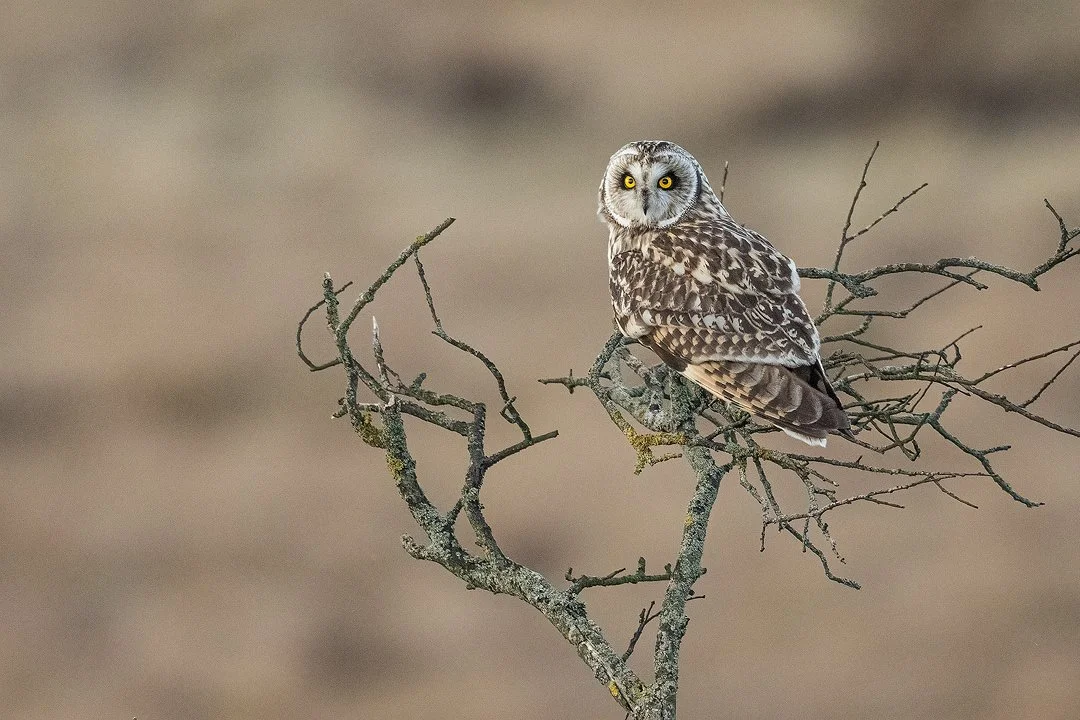
The short-eared owl is a medium-sized owl known for its distinctive hunting habits and unique behaviours. They are typically mottled brown, paler underneath, with bright yellow eyes and short "ear tufts" that are not always visible. Short-eared owls are primarily daytime hunters, often seen quartering over open habitats like grasslands and moorlands, searching for small mammals like voles and birds.
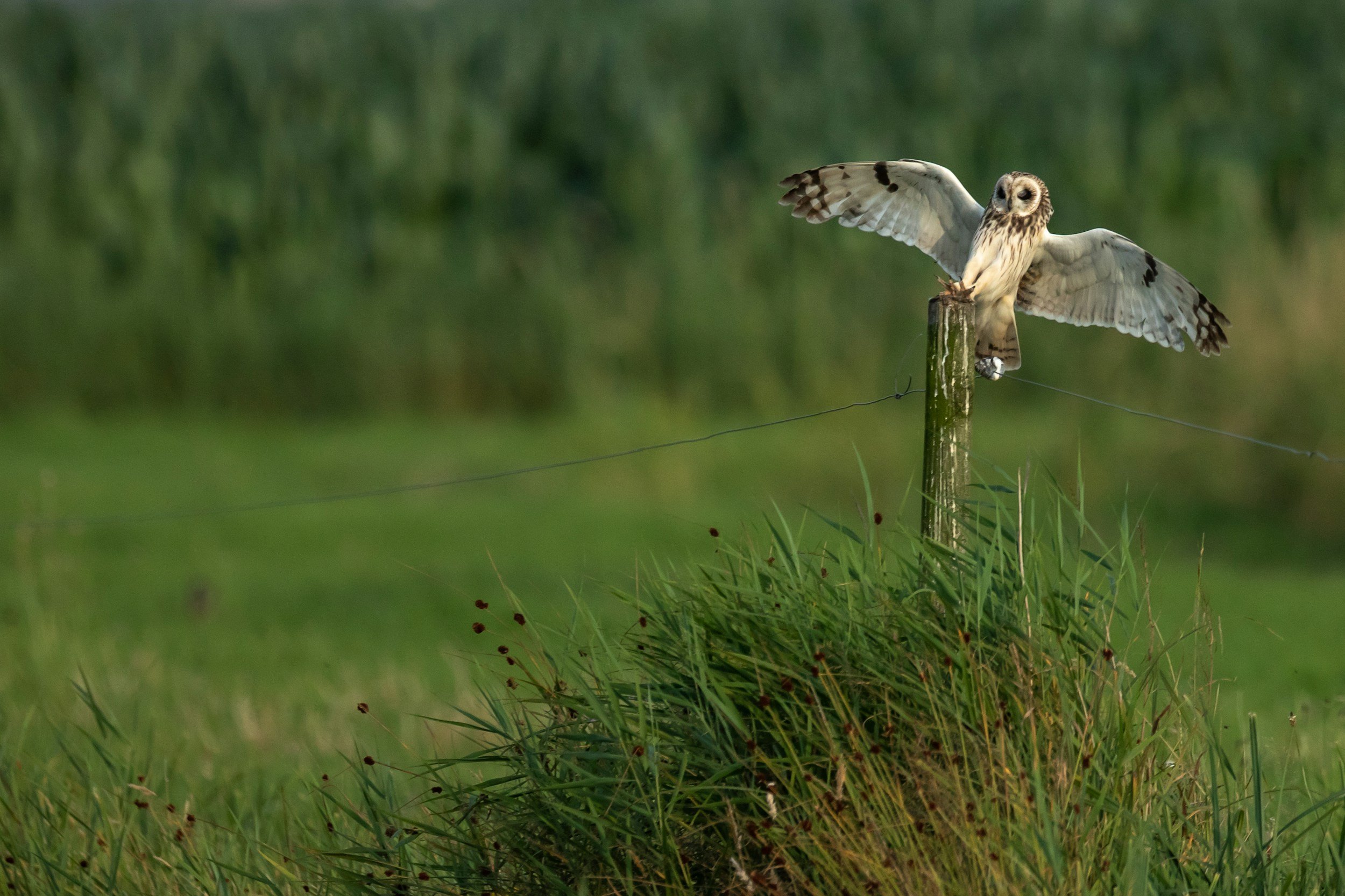
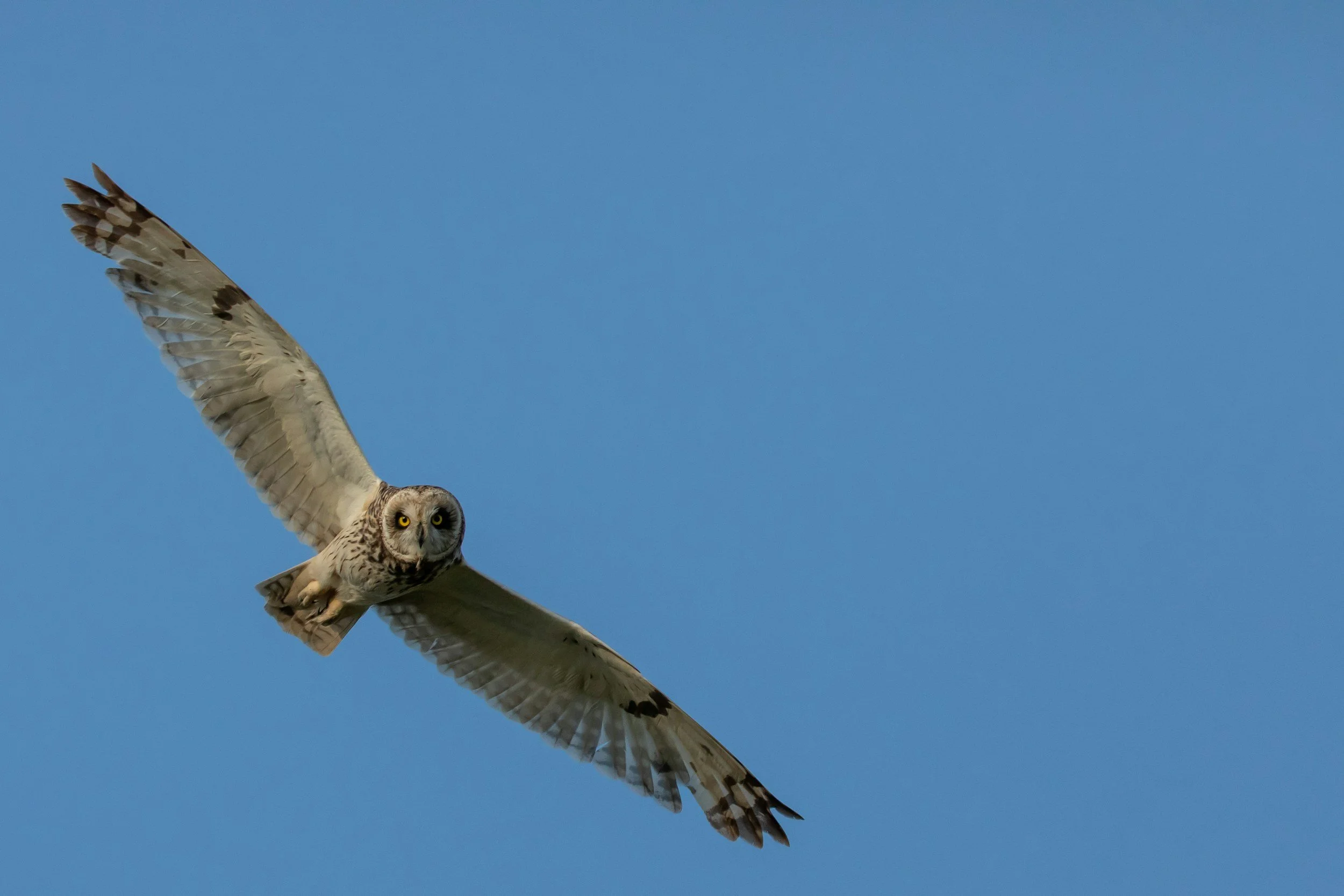
Short-eared owls can be nomadic, breeding in different locations from year to year, and even multiple times in different locations within a single breeding season. Some of them even migrate to the UK from Scandinavia, Russia and Iceland for the winter! The nest on the ground and highly terrestrial, though they may perch on posts while hunting. Their primary prey are small mammals, especially voles, and they hunt by flying low over open fields, swooping down feet-first. They are currently on classified as amber on the … due to recent population and range declines. The breeding range in Britain has almost halved since the last 1960s. This is mainly due to habitat loss, agricultural intensification and illegal persecution. Short-eared owls are known to inhabit the Peak District, particularly in the moorland areas. Despite their tendency to migrate, the Peaks host resident populations of Short-eared owls, particularly in Northern areas like Scotland and North Yorkshire. They are firm favourite of locals and visitors as, unlike most owls, they the are active during the day, especially at dawn and dusk. They are high on the priority list for conservationists in the Peak District as they are vulnerable to being shot or poisoned.